Ethiopia Steps Up Forest Governance with National PFM Guidelines and Digital Tracking Systems.
October, 2026
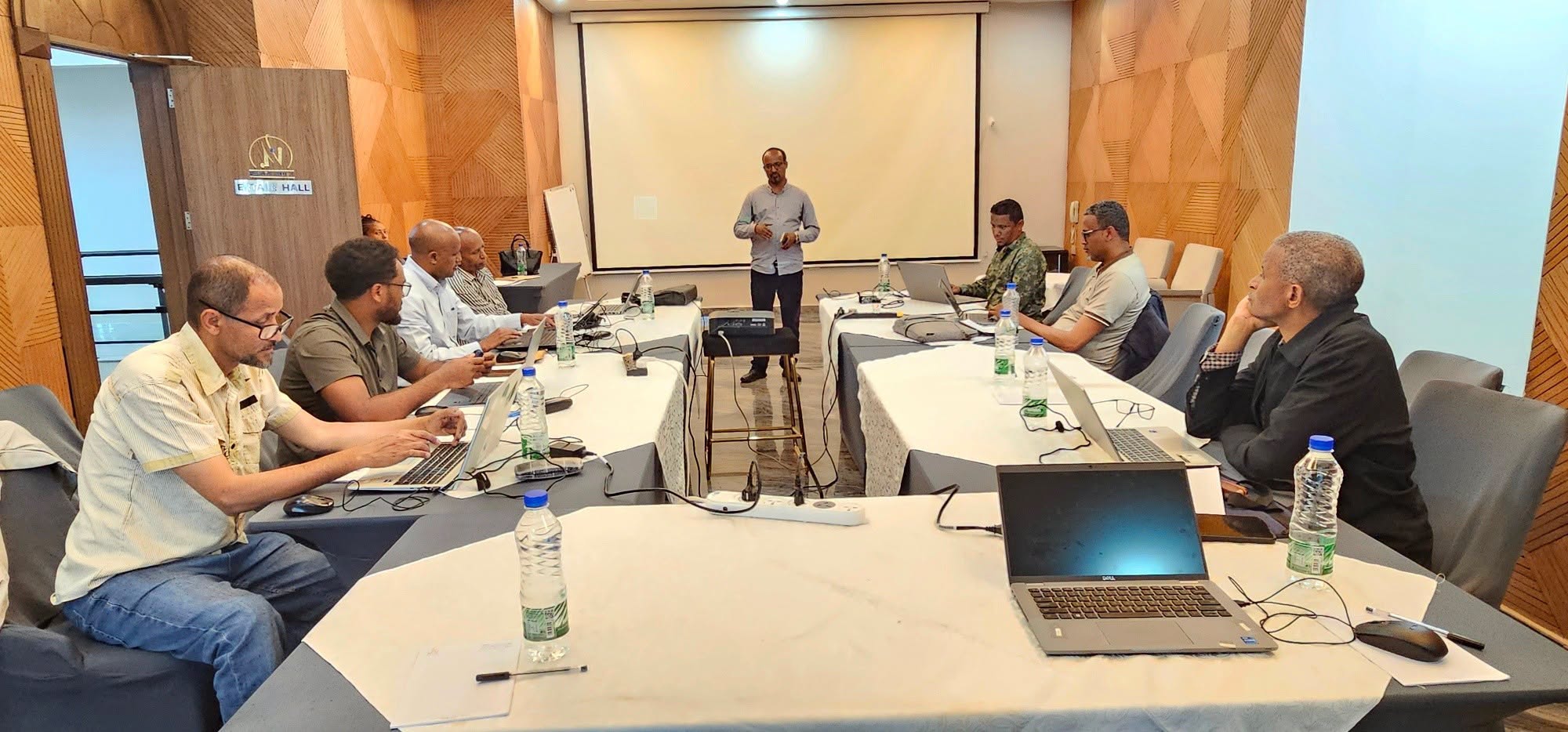
In a major step toward standardizing decentralized forest governance and strengthening environmental accountability, Ethiopian forestry development stakeholders convened in October for a consultation to enrich PFM implementation document, working guidelines and developing PFM monitoring and trucking system.
The consultation brought together senior officials, researchers, and technical experts from the Ethiopian Forestry Development (EFD) and the Ministry of National Strategy. The centerpiece of the deliberations was the review and further consultation of three inter connected tools:
1. Ethiopia’s Revised Participatory Forest Management (PFM) Guideline.
2. The PFM Monitoring and Tracking System.
3. The Web-Based Information System for Forest Governance.
Addressing participants during the opening session, Mr. Kabtamu Girma, CEO of Natural Forests at EFD, underscored that “The technical guidance, rigorous monitoring frameworks, and web-based information infrastructure are no longer optional extras but rather, indispensible imperatives for tracking the national PFM sites actual impact, sustainability, trajectory and beyond.”
1. Context & Background: The Evolution of PFM in Ethiopia
Participatory Forest Management was introduced in Ethiopia in the late 1990s as a community-centered alternative to top-down, state-only forest protection models. By granting local Forest User Groups (FUGs) legal management rights and user privileges, PFM aimed to align ecosystem conservation with rural livelihood benefits.
While PFM successfully reduced deforestation rates and promoted forest regeneration across key priority areas, implementation across regions remained fragmented basically because:
. Lack of Uniformity: NGO-led and government-led projects implemented varying PFM methodologies, resulting in inconsistent legal contracts and management rules.
. Information Gaps: Historical monitoring relied on ad-hoc reporting, making real-time oversight of forest condition changes or socio-economic benefits virtually impossible.
. Institutional Vulnerability: Lack of centralized tracking led to community group inactivity over time when project cycles ended.
Hence, this consultation workshop represents an institutional response to these long-standing structural bottlenecks.
2. Key Elements Consulted and Reviewed at the Workshop
A. Consolidated PFM Guideline
The updated guideline harmonizes best practices from decades of field experience into a unified, step-by-step roadmap. It provides clear directives for extension agents and local authorities on how to establish community user groups, formalize land management contracts, ensure inclusive decision-making and structure equitable benefit-sharing mechanisms.
B. Standardized Monitoring and Tracking System
To move past subjective assessments, the new monitoring framework sets baseline performance indicators. It evaluates key metrics, including:
. Ecological Health: Canopy cover, natural regeneration, and biomass dynamics.
. Socio-Economic Outcomes: Income diversification (e.g., non-timber forest products like honey, spices, and coffee) and community reinvestment rates.
. Governance Performance: Group functionality, financial transparency, and dispute-resolution capabilities.
C. Web-Based Information System
The digital backbone of this effort is a web-based portal designed to centralize geospatial data, remote sensing feeds, and field-level reports from across the national PFM sites. This platform facilitates data-driven policymaking, enabling federal and regional authorities to identify degraded zones, track re-afforestation milestones, and deploy targeted interventions in near real-time.
3. Analysis: Strategic Implications for National Policy & Sustainability
The guidelines has been formulated by taking three basic Domains of analytics namely, Ecological domain, Socio-Economic domain and Governance. Each domain is meticulously reviewed in the guideline together with activities and there respective indicators.
Dr. Motuma Tolera, who is the head of the Forest Sector Transformation Unit (FSTU), emphasized during the discussion session that, “Transitioning from paper-based, isolated monitoring to a integrated digital oversight framework is essential to transform forest management from localized projects into a resilient nationwide initiative”.
4. Immediate Next Steps & Road Ahead
Following the consultative workshop, Dr. Mulugeta, who is the project manager of FOLUR recommends the following key steps that determine the operational success of the new framework and has to be given care of:
. Regional Capacity Building: Roll out comprehensive training programs for Woreda-level agricultural and forestry extension workers on utilizing the updated guidelines.
. Infrastructure Rollout, web development & Data Entry: Develop and opulate the web-based system with existing regional forest data and train local focal points on digital input devices.
. Legal Framework Integration: Formally integrate the after validated PFM guidelines into regional forest regulations to guarantee statutory enforceability of community management rights.